The Know AML website uses a third-party service provided by Google that dynamically translates web content. Translations are machine generated, so may not be an exact or complete translation, and Know AML cannot guarantee the accuracy of translated content. Know AML and its employees will not be liable for any direct, indirect, or consequential damages (even if foreseeable) resulting from use of the Google Translate feature. For further support with Google Translate, visit Google Translate Help. The interviews webpage also uses YouTube, where subtitles and translations are generated automatically by AI; please be advised to exercise caution when precise interpretation is required. For further support with YouTube, visit YouTube Help.
When might a clinical trial be right for patients, and how can they get involved?
Erik Aerts
March 16, 2026
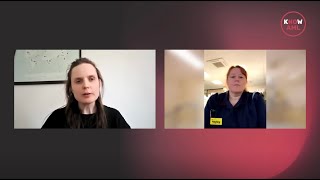
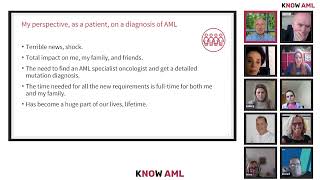
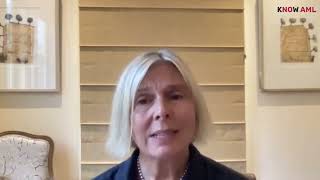
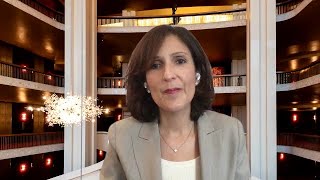
For AML World Awareness Day 2026, Know AML was pleased to speak with Know AML Ambassadors Erik Aerts, a specialist hematology nurse based in Switzerland, and Charles Craddock, an acute myeloid leukemia (AML) physician based in the United Kingdom. We asked, When might a clinical trial be right for patients, and how can they get involved?
Erik explains that clinical trials can be an option at any stage of the AML journey, including at diagnosis, during remission (when signs of leukemia are no longer detectable), or if the disease comes back (relapses). He encourages patients to ask their doctor whether a clinical trial might be suitable for them. He highlights that clinical trials are closely monitored for safety, completely voluntary, and can give patients access to new treatments which may not be available otherwise.
Charles agrees that clinical trials are essential for improving how AML is treated. Patients who take part in clinical trials often have better results than expected, whether they receive the standard treatment (control drug) or the new treatment being studied. Charles explains that patients can contribute to AML research in other ways, such as by joining patient registries. These registries collect information from patients outside of clinical trials to help doctors to understand more about AML and improve care for future patients.
Thank you to our official sponsors, Thermo Fisher Scientific, Kura Oncology, and Sumitomo Pharma. All content was developed by SES in collaboration with an expert ambassador group. Sponsors were allowed no influence.
This video is for informational or educational purposes only, and does not substitute professional medical advice or consultations with healthcare professionals.
To view YouTube subtitles in your language, click the Settings (gear) icon on the video player, go to Captions, then choose Auto-translate and select your preferred language.
Please note, Know AML cannot guarantee the accuracy of the automatic subtitles and translations as AI is used for their creation. Please exercise caution when precise interpretation is required.