The Know AML website uses a third-party service provided by Google that dynamically translates web content. Translations are machine generated, so may not be an exact or complete translation, and Know AML cannot guarantee the accuracy of translated content. Know AML and its employees will not be liable for any direct, indirect, or consequential damages (even if foreseeable) resulting from use of the Google Translate feature. For further support with Google Translate, visit Google Translate Help. The interviews webpage also uses YouTube, where subtitles and translations are generated automatically by AI; please be advised to exercise caution when precise interpretation is required. For further support with YouTube, visit YouTube Help.
What is the difference between intensive chemotherapy and targeted therapies, and how do doctors decide which treatment is right?
Charles Craddock
March 16, 2026
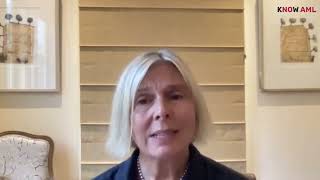
For AML World Awareness Day 2026, Know AML was pleased to speak with Charles Craddock, an acute myeloid leukemia (AML) physician and Know AML Ambassador based in the United Kingdom. We asked, What is the difference between intensive chemotherapy and targeted therapies, and how do doctors decide which treatment is right?
Charles explains that intensive chemotherapy has long been a main treatment for patients with AML who are well enough to cope with a stronger therapy. It works by killing cells that grow quickly, including leukemia cells. It can also affect healthy cells, which can lead to side effects such as infections, bleeding, hair loss, diarrhea, vomiting, and mouth sores. Because of these risks, patients usually need to stay in hospital during treatment.
Charles discusses a newer type of treatment called targeted therapies, which are designed to focus on certain changes, called mutations, that help leukemia cells survive and grow. Targeted therapies can be given on their own or together with other medicines. In some cases, they can be gentler than intensive chemotherapy. However, they can still lower blood counts and lead to side effects. He explains that younger patients who are well enough to cope with stronger therapy are more likely to receive intensive chemotherapy, sometimes together with a targeted drug, and older patients are often treated with targeted therapies alone.
Thank you to our official sponsors, Thermo Fisher Scientific, Kura Oncology, and Sumitomo Pharma. All content was developed by SES in collaboration with an expert ambassador group. Sponsors were allowed no influence.
This video is for informational or educational purposes only, and does not substitute professional medical advice or consultations with healthcare professionals.
To view YouTube subtitles in your language, click the Settings (gear) icon on the video player, go to Captions, then choose Auto-translate and select your preferred language.
Please note, Know AML cannot guarantee the accuracy of the automatic subtitles and translations as AI is used for their creation. Please exercise caution when precise interpretation is required.