The Know AML website uses a third-party service provided by Google that dynamically translates web content. Translations are machine generated, so may not be an exact or complete translation, and Know AML cannot guarantee the accuracy of translated content. Know AML and its employees will not be liable for any direct, indirect, or consequential damages (even if foreseeable) resulting from use of the Google Translate feature. For further support with Google Translate, visit Google Translate Help. The interviews webpage also uses YouTube, where subtitles and translations are generated automatically by AI; please be advised to exercise caution when precise interpretation is required. For further support with YouTube, visit YouTube Help.
Treating patients with FLT3-mutated AML: What you need to know
Charles Craddock
December 22, 2025
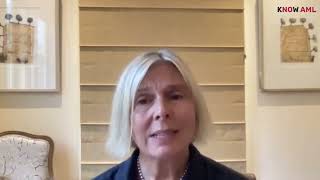
During the recent Know AML Ambassador Meeting, Professor Charles Craddock talked about treatments that are available for a type of acute myeloid leukemia (AML) with changes in the FLT3 gene, and discussed these with the other ambassadors.
Professor Craddock explained that mutations in the FLT3 gene are the most common genetic change in AML, affecting around 30% of patients.¹ He then described why testing patients to see if they have FLT3 mutations, at diagnosis and if the AML returns, is important to help doctors choose the most effective treatments for each individual. He also talked about newer medicines, called FLT3 inhibitors, that are designed to target only leukemia cells with this specific mutation and help treat AML without harming normal body cells.
Professor Craddock also highlighted the importance of patients being actively involved in making decisions about their care. He encouraged them to ask questions, particularly to help understand their test results, and speak openly with their care team about side effects from the medicines they are taking and how they are feeling emotionally. The discussion with the other ambassadors also included how important nurses, caregivers, and patient organizations are to help patients feel supported and balance treatment with everyday life.
This educational resource is independently supported by Astellas. All content was developed by SES in collaboration with an expert ambassador group. Funders were allowed no influence on the content of this resource.
References
- Jalte M, Abbassi M, Mouhi H, et al. Cureus. 2023;15(9):e45765. DOI: 10.7759/cureus.45765.